


From Anvil Aerospace | Max Crew1 | In-Game Status Flight Ready
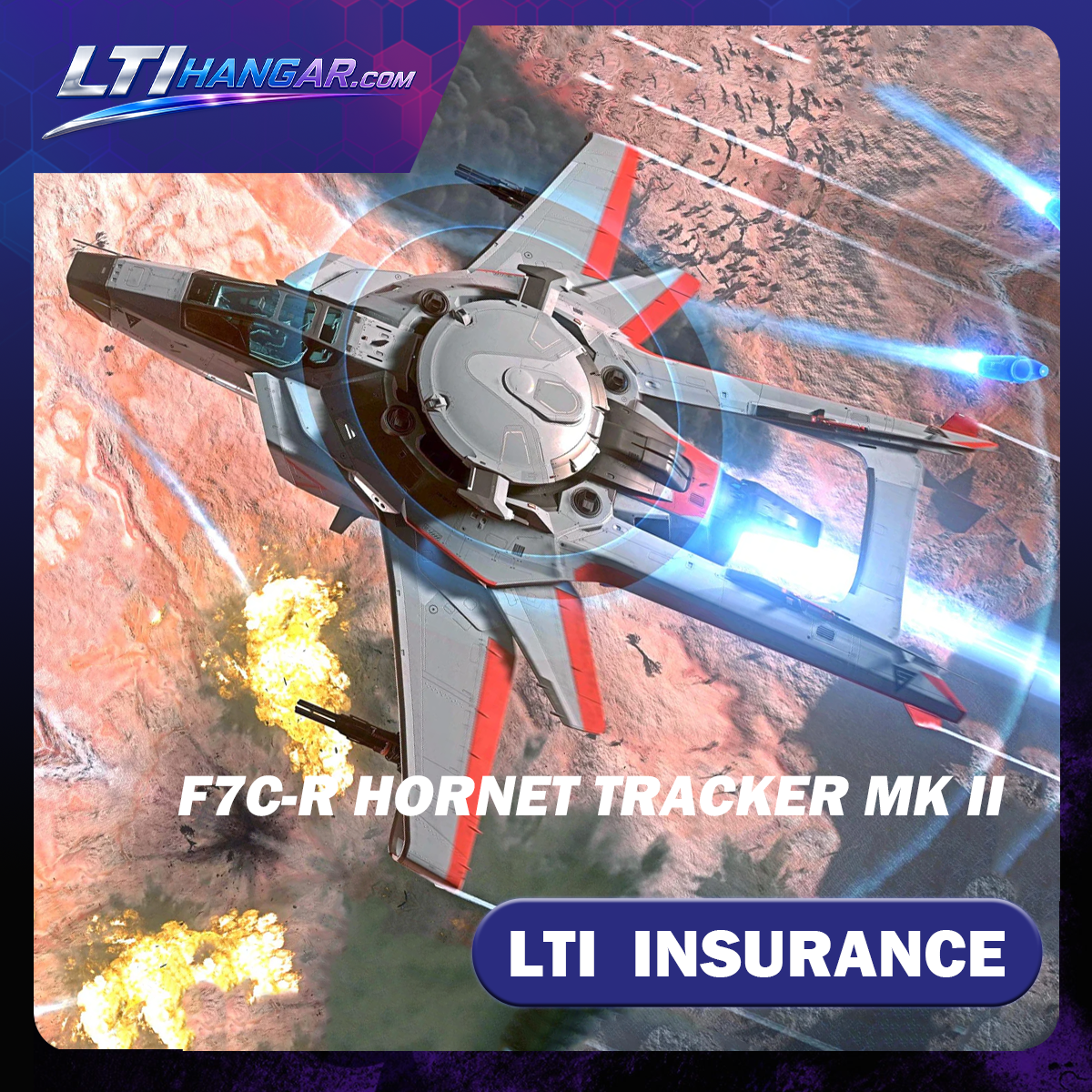
F7C-R Hornet Tracker Mk II - Standalone Ship
Enter Your Information
Please check our delivery times.
- Star Citizen Ships: Average Time 20–30 Minutes; Maximum 12 hours
- Star Citizen aUEC: Delivered Within 3–5 Minutes.
- Star Citizen CCU: Average Time 20–30 Minutes; Maximum 12 Hours.
- Star Citizen Paints: Average Time 5 Minutes; Maximum 12 Hours.
- Star Citizen Items: Average Time 5 Minutes; Maximum 12 Hours.
How to Claim Star Citizen Ships,CCUs,Paints,and Items
- In order to accept this item, you must have an account on robertspaceindustries.com. Access to Star Citizen (the game) requires a game package.
- All orders will be sent to the email you input when you check out. You will receive an email with the title "Someone sent you a gift from Roberts Space Industries" from no-reply@robertsspaceindustries.com . Open the email and click the blue "claim gift" button to claim your order.
- If you want your order to end up in an account that's not attached to the email you've provided us, all you have to do is log onto the correct RSI account in a separate tab before claiming the item (please refresh the RSI page to ensure you're on the correct account). If you're buying this item as a gift, all you have to do is right click the blue "claim gift" button and copy link address (make sure you're logged out of your RSI account so you don't accidently claim it).
Critical Safety Instructions
- ATTENTION: All ships and items can be gifted only once. Once claimed, the item (Ship, CCU, Paint, Armor, Weapon, etc.) is permanently bound to the account that accepted it. Therefore, please be careful to be logged into the correct RSI account when you redeem your gift email.
- Make sure you are logged into the specific RSI account where you want to receive the item in the same browser before you claim the gift. We are not responsible if you claim the item on the wrong RSI account.
How to Apply a CCU (Ship Upgrade)
If you purchased a Cross Chassis Upgrade (CCU) to transform one ship into another, follow these steps:
- Claim the Item: Follow the delivery steps above to add the CCU to your RSI Hangar.
- Locate in Hangar: Go to the "My Hangar" section on the RSI website.
- Apply Upgrade: Click on the arrow next to your CCU to expand the details. Click the "Apply Upgrade" button. Select the "Source Ship" you wish to upgrade and enter your RSI password to finalize the process.
Important Note: The insurance (e.g., LTI) and other bonuses from the original base ship will carry over to the new ship.
Upgrading from a lower-value ship to a higher-value ship may require multiple CCUs.
For example: If you purchase an upgrade from a Merchantman to a Polaris, we will send you two CCUs—one from Merchantman to Hammerhead, and another from Hammerhead to Polaris. The larger the price gap of the upgrade, the greater the number of CCUs you will receive.
Shop with Confidence: Customer Protection Policy
Purchase Protection
By making a purchase on our website, you are guaranteed to receive the correct item exactly as advertised. If we are unable to deliver the item, we will offer either a replacement or a full refund. You may choose whichever option you prefer.
After-Sale Protection
All items we sell come from our own inventory and are covered by our after-sale protection policy. is any issue with an item during delivery or within up to 6 months after the delivery has been completed, we will conduct an investigation. If it is determined that we are at fault, we will provide either a replacement or a refund.
In most cases, this will result in a full replacement, a full refund, or an upgrade to a better item if the exact replacement is unavailable.
24/7 Customer Support
Experience unparalleled support with our 24/7 online customer service! Whether you have questions, need assistance, or require immediate solutions, our dedicated team is always ready to help. No matter the time or day, we're just a click away, ensuring you receive the support you need when you need it most.
Join us now discord experience the LTI Hangar difference!
In Stock · RSI Gift Delivery · Average 20 Min Delivery



Contact our Discord live support; we are online 24/7.

Why Players Choose LTI Hangar
Fast ship delivery, real support, and a clear RSI gifting process — built for Star Citizen players who want a smoother buying experience.
Average 20–30 minute delivery
24/7 Discord customer support
A team formed by gamers with over ten years of experience.
Secure Shopping,Own stock, not third-party listings
Reliable After-Sale Support
Orders can be tracked in real time.
Frequently Asked Questions
How long does delivery usually take?
- Star Citizen ship,ccu,paints,items orders are usually delivered within 20–30 minutes. In rare cases, delivery may take up to 12 hours due to order volume, RSI gifting limits, account status, or manual verification requirements.
- In most cases, we do not allow ship deliveries to exceed 12 hours unless there is an exceptional issue such as RSI system limitations, account restrictions, or required customer verification.
Is my ship order protected?
- Yes. Security and reliability are our top priorities. All ships sold by LTI Hangar come from our own inventory, with no external sellers or unknown third-party suppliers involved.
- Each ship order is handled with clear delivery records, allowing the delivery process to be reviewed and traced if support is ever needed. We also provide 6-month after-sale protection for eligible delivery-related issues.
- This level of own-stock control, traceable delivery, and after-sale protection is not commonly offered by many third-party marketplaces, which is why many customers choose LTI Hangar for safer Star Citizen ship purchases.
What is the 6-month after-sale protection?Why Other Marketplaces Cannot Offer This?
- In the extremely rare event that an issue occurs with an item during delivery or within up to 6 months after delivery has been completed, we will conduct an investigation. If it is determined that the issue was caused by our fault, we will provide either a replacement or a refund.
- To help us review the case accurately, you may be required to assist us by providing relevant evidence, such as RSI Hangar screenshots, order details, and RSI Hangar Log records.
- The RSI Hangar Log can help track the status and history of each ship, including whether the item was claimed, exchanged, melted, transferred, or otherwise changed after delivery. We will review the evidence you provide to determine the cause of the issue.
- This level of protection is not commonly offered by many third-party marketplaces because they often rely on external sellers or mixed inventory sources. At LTI Hangar, all ships come from our own inventory, and each order has clear delivery records, allowing us to provide safer and more reliable support.
Can I request a refund after claiming the ship,ccu,paints,items?
- Once the RSI gift has been claimed, the ship,ccu,paints,items becomes bound to the receiving RSI account. Due to the limitations of the Star Citizen gifting system, a claimed ship normally cannot be gifted again, returned, reversed, or re-delivered. For this reason, claimed items are normally not eligible for cancellation or refund.
- A correction, replacement, or refund may only be provided if we confirm that the issue was caused by our side, such as a wrong item being sent, an order delivery error, or another verified delivery issue caused by us.
- Before claiming the RSI gift, please make sure you are logged into the correct RSI account. Once the gift is claimed to the wrong account, it normally cannot be moved to another account.
What happens if the wrong ship,ccu,paints,items is delivered?
If we confirm that the wrong item was delivered due to our error, we will review the case and provide a correction, replacement, or refund where applicable. Please contact us with your order number, checkout email, and clear screenshots of your RSI Hangar.
Why are the names of the Star Citizen ships I received different?
Standalone CCU'ed is a complete ship or vehicle. It is not an upgrade! CCU'ed simply means that it was created by upgrading a smaller ship or vehicle to the one you are buying. Please also note that in the gift email, only the ship that was used as the base for upgrading will be named. Please don't worry, the actual ship you will see in your hangar will be the one you've ordered.
For example, this is how a CCU'ed Polaris looks like in hangar on RSI website.


HOW IT WORKS
Fast simple and secure, learn how it works!

HOW SECURE IS IT?
Security is our number one priority.Unlike other websites, we only sell ourown stock. We do not allow anyexternal sellers on our platform. Thisensures full security and peace ofmind as well as blazing fast
deliveries!

HOW WE DELIVER?
The item will be delivered via the RSI gifting system. After placing your order, we will send the item to the email address you provided at checkout. Once you receive the gift email, simply open it and click “Claim,” and the item will be added to the account you are logged into.

AFTER-SALE PROTECTION
All items we sell come from our own inventory and are covered by our after-sale protection policy.,is any issue with an item during delivery or within up to 6 months after the delivery has been completed, we will conduct an investigation. If it is determined that we are at fault, we will provide either a replacement or a refund.

CONTACT US
Star Citizen is a complex universe! If you have any questions, we are always happy to help! We are online 24 hours a day to assist you. Plus, our Discord channel features even more discount codes and giveaways!
Anvil F7C-R Hornet Tracker Mk II Standalone Ship Gameplay Guide
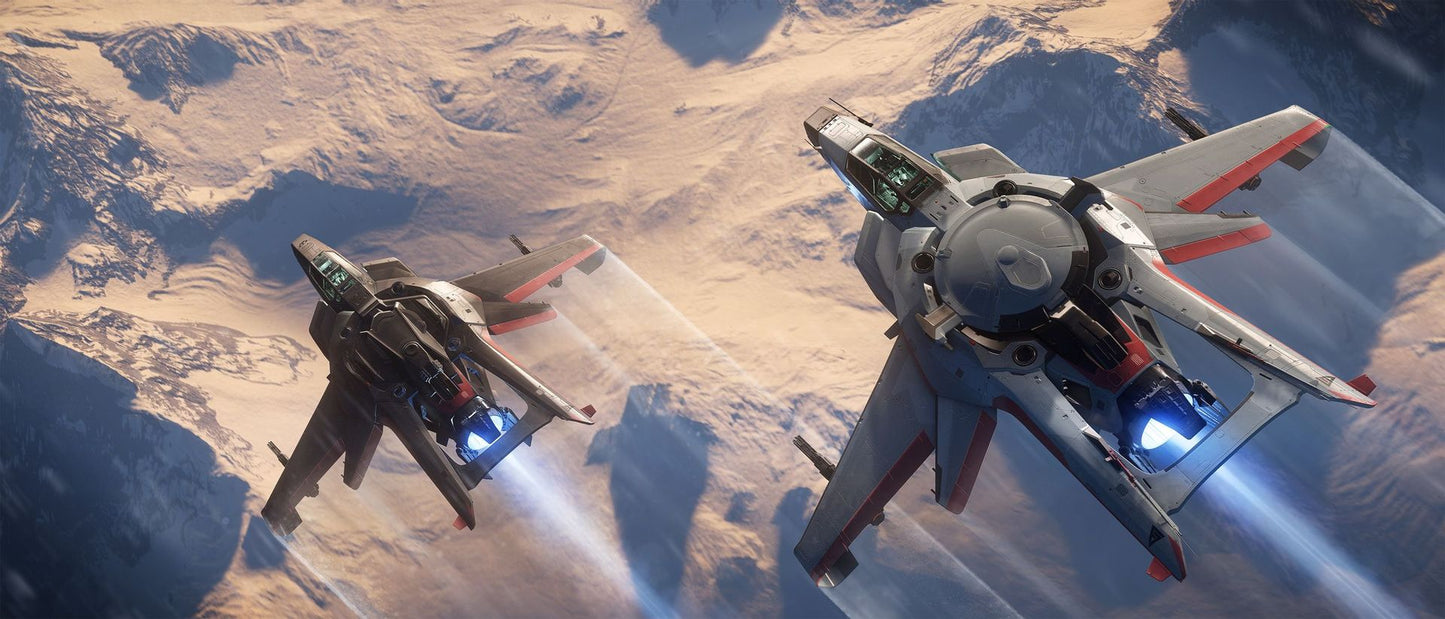
The Anvil F7C-R Hornet Tracker Mk II is a single-seat reconnaissance fighter built for Star Citizen players who want the Hornet Mk II chassis, enhanced scanning capability, long-range target detection, and a clearer information role within a fighter squadron.
It is not the standard cargo-capable F7C Mk II, the lower-signature Ghost Mk II, the two-seat Super Hornet Mk II, or the military-firepower F7A Mk II. The Tracker is best understood as the sensor-focused Hornet: a combat-capable Hornet that gives up the standard center cargo module or an additional weapon turret in favor of a dedicated radar-booster module.
Official RSI material describes the F7C-R Tracker Mk II as a specialist Hornet equipped with upgraded long-range radar and enhanced scanning capability. Its official technical sheet lists one crew member, two pilot-controlled Size 4 weapon hardpoints, two Size 3 missile-rack hardpoints, two Size 1 shields, and a center-mounted radar-booster module.
The clean product-page positioning is simple:
The F7C-R Hornet Tracker Mk II is the Hornet you choose to find, identify, and follow contacts — not for maximum Hornet firepower, stealth, cargo, or multicrew combat.
Build Your Anvil Reconnaissance Fighter Fleet with the Tracker Mk II
The F7C-R Hornet Tracker Mk II is a good choice for pilots who like the Hornet platform but want a more specialized support role than the standard F7C Mk II provides.
It works best for solo reconnaissance pilots, Anvil collectors, escort groups, bounty hunters searching for contacts, security patrols, and organized squadrons that want a compact fighter capable of contributing sensor information without leaving the pilot defenseless.
Earlier official descriptions of the Tracker family also presented it as useful to explorers, militia forces, and mercenary groups that need improved scan depth and accuracy or a mobile command-and-control presence. Those broader roles remain dependent on the continued development of radar, scanning, and group-information systems.
If you are looking to acquire this Anvil reconnaissance fighter, you can explore our available options in the Star Citizen Ships and Vehicles Collection.
F7C-R Hornet Tracker Mk II Key Specifications
The official Ghost and Tracker Mk II technical sheet gives both specialist variants the same basic Hornet Mk II dimensions, components, pilot weapons, and missile hardpoints. The Tracker’s defining difference is its dedicated radar-booster module. Specifications and balance may continue to change during development.
| Specification | Anvil F7C-R Hornet Tracker Mk II | Gameplay Meaning |
|---|---|---|
| Manufacturer | Anvil Aerospace | Part of Anvil’s combat-focused Hornet family. |
| Series | F7 Hornet Mk II | Uses the updated Mk II Hornet chassis. |
| Role | Sensor-Focused Reconnaissance Fighter | Built around contact detection, target tracking, and information support, not maximum Hornet firepower or full exploration-ship utility. |
| Status | Flight Ready | Available as part of the current Hornet Mk II lineup. |
| Crew | 1 | Fully operated by one pilot with no scanner operator required. |
| Cargo | No practical cargo role in Tracker configuration | The center position is used by radar equipment rather than the standard F7C Mk II cargo module. |
| Length | 22.2 m | Compact fighter-sized hull. |
| Width | 22 m in flight / 15 m landed | Folding-wing Hornet footprint. |
| Height | 6 m | Suitable for normal fighter hangars and pads. |
| Pilot Weapons | 2× Size 4 hardpoints | Meaningful forward firepower without a gunner. |
| Missile Hardpoints | 2× Size 3 racks | Provides secondary missile pressure. |
| Shield Generators | 2× Size 1 | Fighter-level protection rather than heavy-fighter durability. |
| Power Plants | 2× Size 1 | Supports the ship’s weapons, shields, flight systems, and sensors. |
| Coolers | 2× Size 1 | Standard Hornet Mk II cooling configuration. |
| Quantum Drive | 1× Size 1 | Normal small-fighter quantum capability. |
| Jump Drive | 1× Size 1 | Listed on the official technical sheet. |
| Radar / Sensor Role | Size 1 radar with radar-booster center module | Main reason to choose the Tracker, but exact scanning range and gameplay value remain patch-dependent. |
| Computer | 1× Size 1 | Supports avionics and sensor functions. |
| Special Module | Radar-booster center module | Replaces cargo or additional center-mounted combat equipment. |
| Core Gameplay | Contact detection, reconnaissance, patrol support, target tracking, escort awareness | Best for pilots who want information and awareness before combat, not a simple damage upgrade. |
The safest way to present these numbers is as the official published Tracker Mk II configuration rather than permanent final values. RSI’s Ship Matrix states that vehicle specifications can change during design and game balancing.
What Makes the F7C-R Hornet Tracker Mk II Valuable?
The Tracker Mk II is valuable because it gives the Hornet family a dedicated sensor and reconnaissance configuration without removing the basic combat capability of the Hornet chassis.
The standard F7C Mk II is the general civilian Hornet. The Ghost Mk II reduces its own signature. The Super Hornet Mk II adds a second seat and turret gameplay. The F7A Mk II emphasizes military firepower. The Tracker Mk II focuses on finding and following other contacts.
Official RSI descriptions position the Tracker around upgraded long-range radar and enhanced scanning capability.
The Tracker Mk II is not the most heavily armed Hornet in a direct fight. It is the Hornet designed to give its pilot more information before that fight begins.
That distinction matters. The Tracker is not automatically better than every other Hornet. It is more specialized around awareness, detection, reconnaissance, and supporting a wider group with better contact information.
Enhanced Radar and Scanning Role
The defining feature of the Tracker Mk II is its center-mounted radar-booster module.
While the Ghost attempts to reduce its own detectability, the Tracker is designed to improve its ability to search for other ships and contacts. RSI describes it as the Hornet variant equipped with upgraded long-range radar and enhanced scanning capability.
The Tracker helps you find contacts earlier; it does not automatically identify every target or reveal everything in the area.
Practical sensor performance can still depend on:
- Distance from the contact
- The target’s infrared, electromagnetic, and cross-section signatures
- The target’s component and power states
- Environmental interference
- Radar and scanning modes
- Line of sight
- The pilot’s positioning
- Current patch balance
- The implementation state of radar and scanning systems
The Tracker should therefore be sold as an enhanced sensor fighter, not as a guaranteed all-seeing reconnaissance platform.
Radar-Booster Center Module
The Tracker Mk II uses the central Hornet module position for its radar-booster equipment.
On the standard F7C Mk II, this area is associated with a small cargo module. On the Ghost, it holds the signature-reducing module. Combat-focused configurations may use the center position for additional weapons. The Tracker dedicates it to enhanced radar and scanning capability.
| Center Configuration | Main Benefit | Main Trade-Off |
|---|---|---|
| Tracker radar-booster module | Enhanced scanning and long-range contact detection | No standard cargo box or additional center turret |
| Ghost signature module | Reduced ship signatures | Does not improve detection of other contacts |
| F7C cargo module | Light cargo and general utility | No specialist sensor module |
| Combat turret configuration | Additional gun firepower | No dedicated radar-booster module |
The Tracker module improves the Hornet’s information role, but it does not add direct damage.
This is one of the most important buyer expectations. A player who removes the center turret or cargo module for enhanced radar is choosing information and awareness over immediate firepower or practical utility.
Scouting and Contact Identification
The Tracker Mk II is designed for pilots who want to search ahead of a group rather than remain directly beside the main formation.
Potential uses include:
- Checking a route before slower ships arrive
- Investigating unknown radar contacts
- Searching around mission locations
- Supporting bounty-target searches
- Watching approaches to a controlled area
- Helping an escort group maintain awareness
- Following contacts attempting to leave an engagement
- Acting as a compact sensor platform within a larger squadron
The Tracker is most useful when finding the contact matters as much as destroying it.
The ship remains a single-seat fighter, so the pilot must manage scanning, movement, weapons, shields, power, and situational awareness at the same time.
Weapons and Combat Follow-Up
The official Tracker Mk II technical sheet lists two pilot-controlled Size 4 weapon hardpoints, one on each wing. This gives the ship meaningful forward firepower after it has located or identified a target.
| Weapon Feature | Player Meaning |
|---|---|
| 2× Size 4 pilot hardpoints | Useful individual gun mounts for a compact fighter. |
| Fully pilot-controlled | No gunner or second crew member required. |
| No factory center turret | Less total gun coverage than combat-heavy Hornet variants. |
| Reconnaissance fighter with combat capability | Can defend itself after finding a target. |
| Replaceable weapons | Final performance depends on the selected loadout and current balance. |
The Tracker can fight, but its weapons protect and support the sensor role rather than turn it into the most heavily armed Hornet.
The Tracker works best when better information helps the pilot choose the target, approach direction, or moment of engagement. Once combat becomes a simple direct damage contest, the radar module contributes less than an additional weapon turret would.
Missile Capability
The official technical sheet gives the Tracker Mk II two Size 3 missile-rack hardpoints. The exact installed missile arrangement may change with factory loadouts, player customization, and game balance.
| Missile Feature | Gameplay Meaning |
|---|---|
| 2× Size 3 missile racks | Provides secondary ranged pressure. |
| Pilot-controlled ordnance | No additional crew requirement. |
| Useful after target detection | Can support an interception or opening attack. |
| Not a dedicated missile platform | Missile combat is secondary to the radar role. |
| Patch-sensitive performance | Locks, tracking, countermeasures, and damage can change. |
Use the Tracker’s missiles to support an interception, not as the main reason to buy the ship.
Players who want a missile-heavy fighter should compare the Sabre Firebird. Players who want heavy torpedo attacks should compare ships such as the Eclipse or Vanguard Harbinger.
Speed and Handling Expectations
The Tracker Mk II uses the Hornet Mk II flight platform, so buyers should expect the substantial and controlled handling identity of the Hornet family rather than the lighter feel of an Arrow or Gladius.
Exact SCM speed, maximum speed, acceleration, atmospheric behavior, and rotational performance remain subject to current game balance. RSI also warns that official ship specifications may change during development.
The Tracker is agile enough to investigate and intercept contacts, but it is not a dedicated light fighter built only for close-range turning contests.
In practical use, the pilot should:
- Search the area before moving directly toward a contact.
- Check whether additional ships are nearby.
- Decide whether to observe, follow, report, or engage.
- Use the Hornet’s weapons when combat is necessary.
- Maintain an exit route if the contact belongs to a larger group.
- Reposition instead of remaining in a prolonged unfavorable fight.
Shields and Survivability
The official Tracker Mk II configuration includes two Size 1 shield generators, along with two Size 1 power plants and two Size 1 coolers.
This gives the ship fighter-level protection, but it does not make the Tracker a heavy fighter or armored reconnaissance vessel.
The Tracker survives through awareness and positioning, not through heavy armor or oversized shields.
Its survivability comes from:
- Detecting contacts before they are too close
- Avoiding unexpected engagements
- Choosing better approach directions
- Maintaining distance when observation is the objective
- Using the Hornet’s mobility to reposition
- Breaking away before additional enemies arrive
- Using its two shield generators to survive limited exchanges
Once surrounded or forced into prolonged direct fire, the Tracker loses much of the informational advantage that defines its specialist role.
Solo Gameplay Expectations
The F7C-R Hornet Tracker Mk II is a single-seat ship. The official technical sheet lists one crew member, meaning the pilot manages flight, radar, scanning, weapons, missiles, shields, power, and countermeasures.
The Tracker gives one pilot the sensor platform and the fighter, but also gives that pilot responsibility for both roles.
There is:
- No dedicated radar operator
- No co-pilot
- No gunner
- No engineering station
- No command crew
- No multicrew requirement
This makes the Tracker easy to deploy alone, but a busy pilot may need to divide attention between scanning contacts and flying the ship safely.
0 SCU Cargo and Limited Utility
The Tracker’s central module position is dedicated to radar equipment rather than the standard F7C Mk II cargo module.
That means the Tracker should not be treated as a practical cargo or delivery ship. Its value comes from scanning and combat support rather than carrying commodities, vehicles, or mission equipment.
The Tracker gives you better battlefield awareness, not cargo value.
It should not be marketed for:
- Cargo hauling
- Commodity trading
- Vehicle transport
- Mining
- Salvage
- Medical gameplay
- Extended living aboard
- Reliable delivery-box missions
- Multicrew exploration
- Long-duration expedition support
Players who want a practical daily ship should compare the Avenger Titan, Cutlass Black, C1 Spirit, Zeus Mk II CL, or another ship with an interior and proper cargo grid.
Real Player Use: Where the Tracker Mk II Feels Good
The Tracker Mk II feels best when the pilot has a reason to search before shooting.
A real player may use it to approach a mission area, scan the surrounding space, distinguish the primary contact from nearby traffic, and decide whether to continue alone or wait for support.
The Tracker is enjoyable when discovering what is ahead matters more than adding another gun to the top of the ship.
During bounty, patrol, escort, reconnaissance, or organized-group gameplay, the pilot may use the Tracker to:
- Search for mission targets
- Check whether a contact is travelling alone
- Investigate unusual radar returns
- Patrol ahead of cargo or industrial ships
- Follow a contact without immediately committing to combat
- Report the direction and movement of an opposing group
- Identify when an engagement is becoming unsafe
- Support interceptors that are waiting for target information
Its advantage becomes less important when every target is already clearly marked, close to the pilot, and fully engaged.
The Tracker therefore has a more conditional value than a straightforward combat Hornet. Its most useful moments come when detection, information, and target selection are genuine parts of the mission.
When the Tracker’s Advantage Becomes Less Important
The Tracker Mk II should not be presented as an automatic upgrade over the standard Hornet.
Its specialist advantage becomes less important when:
- The target is already visible and close
- Mission markers reveal the exact target location
- The battle is already fully underway
- The pilot only wants direct gun damage
- The group already has a stronger dedicated sensor platform
- The pilot is operating in a very small combat area
- Current scanning mechanics do not provide enough practical differentiation
- The radar module is removed for another center configuration
When the contact is already found, the Tracker becomes a lighter-armed Hornet carrying sensor equipment instead of another combat option.
A practical Tracker Mk II session also includes moments where the sensor advantage feels less important. If the mission marker already shows the exact target, the fight begins at close range, or the pilot only needs to trade damage immediately, the Tracker can feel like a Hornet carrying a radar module instead of another combat option. The ship feels best when the pilot uses the extra awareness before the fight begins: checking nearby contacts, confirming whether the target is alone, watching movement, and deciding whether to engage, follow, or call support.
This is the main situation where the Tracker’s value can feel limited.
Direct Vehicle Comparisons
F7C-R Hornet Tracker Mk II vs Standard F7C Hornet Mk II
This is one of the most important comparisons. The standard F7C Mk II is the general civilian Hornet. It provides a broader baseline configuration and uses its center position for light cargo utility. The Tracker replaces that practical module with enhanced radar equipment.
| Ship | Best For | Main Difference |
|---|---|---|
| F7C-R Tracker Mk II | Scanning, reconnaissance, and contact tracking | Dedicated radar-booster module and no standard cargo box. |
| Standard F7C Mk II | General fighter use and light utility | Broader baseline role with a small cargo module. |
Choose the Tracker Mk II if you want the sensor Hornet. Choose the standard F7C Mk II if you want the more flexible civilian Hornet.
The standard F7C is usually easier to recommend as a first Hornet because its role is broader. The Tracker is the better choice when enhanced radar is specifically what the buyer wants.
F7C-R Hornet Tracker Mk II vs F7C-S Hornet Ghost Mk II
The Tracker and Ghost are specialist Hornets built around opposite sensor strategies. The Tracker is designed to find other ships. The Ghost is designed to make itself less noticeable. Their official technical sheet identifies a radar-booster module for the Tracker and a signature-reducing module for the Ghost.
| Ship | Best For | Main Difference |
|---|---|---|
| F7C-R Tracker Mk II | Finding, identifying, and following contacts | Enhanced radar and scanning. |
| F7C-S Ghost Mk II | Reconnaissance, ambushes, and lower-signature approaches | Reduced ship signatures. |
Choose the Tracker if you want to find other ships. Choose the Ghost if you want other ships to find you later.
The Tracker supports awareness. The Ghost supports concealment.
F7C-R Hornet Tracker Mk II vs Hornet Ghost Mk I
The Hornet Ghost Mk I is the older-generation stealth Hornet, while the Tracker Mk II is a newer Hornet Mk II sensor variant. They are both specialist Hornet-family ships, but they solve different problems.
| Ship | Best For | Main Difference |
|---|---|---|
| F7C-R Tracker Mk II | Finding and tracking contacts | Uses a radar-booster center module on the updated Hornet Mk II chassis. |
| Hornet Ghost Mk I | Legacy stealth-Hornet collection and lower-signature approaches | Older Mk I Hornet frame with stealth-focused identity. |
Choose the Tracker Mk II if you want to find other ships. Choose the Ghost Mk I if you want a legacy stealth Hornet that helps other ships find you later.
The Tracker is the better choice for sensor-focused gameplay. The Ghost Mk I is more relevant for players who specifically want an older stealth Hornet or Mk I collector context.
F7C-R Hornet Tracker Mk II vs F7C-M Super Hornet Mk II
The Super Hornet Mk II is the two-seat combat member of the Hornet family. It offers a dedicated gunner position, stronger combat emphasis, and additional turret firepower. The Tracker remains a one-seat sensor fighter.
| Ship | Best For | Main Difference |
|---|---|---|
| F7C-R Tracker Mk II | Solo scanning and reconnaissance support | Radar-booster module and one pilot. |
| F7C-M Super Hornet Mk II | Pilot-and-gunner combat | Two seats and dedicated turret firepower. Also maps to Super Hornet Mk I legacy models. |
Choose the Tracker Mk II if you fly alone and want enhanced scanning. Choose the Super Hornet Mk II if you have a second player and want stronger combat coverage.
The Super Hornet’s additional player contributes directly to combat. The Tracker’s specialist equipment contributes information instead.
F7C-R Hornet Tracker Mk II vs F7A Hornet Mk II
The F7A Mk II is the military space-superiority Hornet. It is designed around direct combat capability and heavier weapon coverage, while the Tracker uses its center position for radar equipment.
| Ship | Best For | Main Difference |
|---|---|---|
| F7C-R Tracker Mk II | Reconnaissance and contact detection | Sensor module instead of maximum weapon coverage. |
| F7A Hornet Mk II | Military fighter combat | Greater emphasis on direct firepower. Legacy buyers also compare F7A Hornet Mk I. |
Choose the F7A Mk II if you want the military combat Hornet. Choose the Tracker Mk II if you want the reconnaissance Hornet.
The F7A is the clearer choice when direct damage is the buyer’s only concern. The Tracker is the better specialist when finding and following the target is part of the job.
F7C-R Hornet Tracker Mk II vs Anvil Terrapin
The Terrapin is a dedicated armored reconnaissance and exploration ship with a more substantial long-duration scouting identity. The Tracker is a compact Hornet fighter that combines sensor equipment with direct combat capability. RSI has described the Terrapin as an armored scanning ship suited to reconnaissance and exploration.
| Ship | Best For | Main Difference |
|---|---|---|
| F7C-R Tracker Mk II | Fast fighter reconnaissance and combat-capable scouting | Compact single-seat Hornet with two Size 4 pilot guns. |
| Anvil Terrapin | Armored reconnaissance and longer scouting missions | Larger dedicated recon platform with an interior. Also maps to specialized variants like Terrapin Medic. |
Choose the Tracker if you want a fighter that can scan. Choose the Terrapin if you want a dedicated reconnaissance ship that can survive and operate away from the fight for longer.
The Tracker is the better combat fighter. The Terrapin is the clearer dedicated reconnaissance platform.
F7C-R Hornet Tracker Mk II vs Reliant Sen
The Reliant Sen is a small science and exploration platform designed around investigation rather than fighter combat. The Tracker is a combat-capable reconnaissance Hornet.
| Ship | Best For | Main Difference |
|---|---|---|
| F7C-R Tracker Mk II | Military-style scanning, interception, and escort support | More fighter identity and forward weapon capability. |
| Reliant Sen | Science, exploration, and investigation | Broader non-combat research identity and a two-seat platform. |
Choose the Tracker if combat readiness matters. Choose the Reliant Sen if science and exploration gameplay matter more than fighter performance.
The Tracker is the more natural choice for security and combat fleets. The Sen is the more specialized choice for future science-oriented gameplay.
F7C-R Hornet Tracker Mk II vs Zeus Mk II ES
The Zeus Mk II ES is a larger exploration ship intended for longer journeys, crew support, interior living, and broader expedition use. The Tracker is a compact single-seat reconnaissance fighter.
| Ship | Best For | Main Difference |
|---|---|---|
| F7C-R Tracker Mk II | Fighter scouting, patrol, and target detection | Compact, solo, and combat-focused. |
| Zeus Mk II ES | Longer exploration missions and crewed travel | Larger interior, broader utility, and expedition capability. |
Choose the Tracker if you want a reconnaissance fighter. Choose the Zeus ES if you want a complete exploration ship.
The Tracker can support an expedition fleet, but it does not replace a ship with living space, cargo, and longer-duration crew facilities.
F7C-R Tracker Mk II vs Hornet / Sensor Family
The Tracker Mk II should be placed carefully within the broader Hornet, reconnaissance, and sensor family. It is not a Terrapin replacement, not a Zeus ES replacement, and not a pure science ship like the Reliant Sen. It is a Hornet fighter with improved contact-detection identity.
| Ship / Family Option | Best For | Main Difference |
|---|---|---|
| F7C-R Tracker Mk II | Reconnaissance inside a fighter platform | Sensor-focused Hornet with radar-booster module. |
| F7C-S Ghost Mk II | Stealth approach inside a fighter platform | Reduces its own signature instead of improving detection. |
| Hornet Ghost Mk I | Legacy stealth-Hornet collection | Older stealth Hornet identity, not a sensor platform. |
| Standard F7C Mk II | General civilian Hornet use | More flexible baseline Hornet with light utility. |
| Anvil Terrapin | Dedicated armored reconnaissance | More durable and purpose-built for recon work, but less fighter-like. |
| Reliant Sen | Science and investigation | More science-oriented and less combat-focused. |
| Zeus Mk II ES | Broader exploration and travel | Larger exploration ship with interior and expedition utility. |
Choose the Tracker when you want reconnaissance inside a fighter platform. Choose the Terrapin when you want a tougher dedicated scouting ship. Choose the Zeus ES when you want a broader exploration ship with interior utility. Choose the Ghost when your goal is stealth approach rather than finding other contacts.
This keeps the Tracker’s role useful without overstating it as a full replacement for dedicated reconnaissance or exploration ships.
Combat, Scanning, and Practical Expectations
The Tracker Mk II is specialized. It should not be sold as the best Hornet for every player.
If the buyer wants:
- enhanced scanning and contact tracking, choose the F7C-R Tracker Mk II.
- lower-signature Hornet gameplay, choose the F7C-S Ghost Mk II.
- general civilian Hornet flexibility, choose the standard F7C Mk II.
- two-seat turret gameplay, choose the Super Hornet Mk II.
- military Hornet firepower, choose the F7A Mk II.
- legacy stealth-Hornet collection, compare the Hornet Ghost Mk I.
- armored dedicated reconnaissance, compare the Terrapin.
- science and investigation gameplay, compare the Reliant Sen.
- longer exploration missions, compare the Zeus Mk II ES.
- pure light-fighter dogfighting, compare the Gladius or Arrow.
- cargo or daily utility, choose a ship with a proper interior and cargo grid.
The Tracker Mk II is valuable because it is a specialized sensor Hornet, not because it replaces every combat, exploration, or reconnaissance ship.
Explore F7C-R Hornet Tracker Mk II Upgrade Paths
Players who prefer to build toward the Tracker Mk II from another ship can explore available Star Citizen F7C-R Hornet Tracker Mk II CCU Upgrades and plan a more flexible Anvil, Hornet, reconnaissance, or combat-fighter upgrade path.
Before purchasing, buyers should confirm whether the product listing is:
- A standalone ship
- An original pledge
- A CCU-upgraded ship
- A Warbond edition
- A store-credit edition
- A time-limited pledge
- Part of a larger package
- Supplied with LTI or another insurance duration
The in-game ship and its gameplay role remain the same, but insurance, melt value, upgrade history, and gifting conditions may differ between listings.
F7C-R Tracker Mk II vs Other Star Citizen Ships
| Ship Fleet Option | Primary Core Role | Compared with F7C-R Tracker Mk II |
|---|---|---|
| F7C-R Tracker Mk II | Sensor Hornet | Good for players who specifically want reconnaissance within the Hornet platform. |
| F7C Hornet Mk II | General Civilian Fighter | Better for baseline flexibility and light utility. |
| F7C-S Ghost Mk II | Stealth Hornet | Better for reducing the pilot’s own signature. |
| Hornet Ghost Mk I | Legacy Stealth Hornet | Better for older Hornet collectors and Mk I stealth flavor. |
| F7C-M Super Hornet Mk II | Two-Seat Combat Hornet | Better for pilot-and-gunner combat. |
| F7A Hornet Mk II | Military Space-Superiority Fighter | Better for direct Hornet firepower. |
| Anvil Terrapin | Armored Reconnaissance Ship | Better for dedicated scouting and longer-duration recon. |
| Reliant Sen | Science and Exploration | Better for investigation and science-oriented gameplay. |
| Zeus Mk II ES | Exploration Ship | Better for crewed exploration, interiors, and longer trips. |
| Gladius | Light Fighter | Better for straightforward dogfighting practice. |
| Arrow | Agile Light Fighter | Better for compact agility-focused combat. |
| Anvil Hawk | Bounty / Interdiction Fighter | Better for a different specialist Anvil combat role. |
| Vanguard Sentinel | Heavy Electronic-Warfare Fighter | Better for heavy-fighter endurance and electronic-combat identity. Maps to Vanguard Warden hulls as well. |
| Herald / Data Runners | Data Runner | Better for data transport and high-speed information delivery. Fits Mercury Star Runner parameters. |
F7C-R Tracker Mk II vs Standard F7C Hornet Mk II
The standard F7C Hornet Mk II is better for players who want a more flexible civilian Hornet with light cargo and broader configuration options. The Tracker Mk II is better for players who specifically want the radar-booster center module and a sensor-focused patrol role. Choose the standard F7C Mk II for general Hornet use. Choose the Tracker Mk II for reconnaissance and contact tracking.
F7C-R Tracker Mk II vs F7C-S Ghost Mk II
The Ghost Mk II is better for players who want to reduce their own signature and approach more quietly. The Tracker Mk II is better for players who want to find, identify, and follow other contacts more effectively. Choose the Ghost for stealth approach. Choose the Tracker for sensor-focused Hornet gameplay.
F7C-R Tracker Mk II vs Hornet Ghost Mk I
The Hornet Ghost Mk I is better for players who specifically want the older classic Hornet frame or legacy stealth-Hornet collector appeal. The Tracker Mk II is better for players who want the newer Hornet Mk II chassis with a radar-booster module and a contact-detection role. Choose the Ghost Mk I for legacy stealth-Hornet collection. Choose the Tracker Mk II for the newer sensor Hornet platform.
F7C-R Tracker Mk II vs F7A Hornet Mk II
The F7A Hornet Mk II is better for players who want military Hornet identity and direct fighter firepower. The Tracker Mk II is better for players who want reconnaissance, contact detection, and information support inside the Hornet family. Choose the F7A Mk II for military combat identity. Choose the Tracker Mk II for sensor-focused positioning.
F7C-R Tracker Mk II vs Anvil Terrapin
The Terrapin is better for players who want a dedicated armored reconnaissance ship with a broader scouting identity. The Tracker Mk II is better for players who want a combat-capable Hornet that can help find and follow contacts. Choose the Terrapin for dedicated recon durability. Choose the Tracker Mk II for fighter-based reconnaissance.
F7C-R Hornet Tracker Mk II Strengths and Limitations
| Strategic Strengths | Operational Limitations |
|---|---|
| Dedicated sensor-Hornet identity | Less direct firepower than combat-heavy Hornets. |
| Radar-booster center module | No standard cargo box or center weapon turret. |
| Enhanced long-range radar positioning | Exact scanning advantage remains patch-dependent. |
| Two Size 4 pilot weapon hardpoints | Only two factory forward weapon positions. |
| Two Size 1 shields | Not durable enough for heavy-fighter brawling. |
| Single-seat simplicity | No dedicated scanner operator or co-pilot. |
| Reconnaissance fighter with combat capability | Pilot must manage scanning and combat simultaneously. |
| Compact Hornet Mk II chassis | No living interior or expedition facilities. |
| Useful for escort and patrol groups | Group-support value depends on sensor and information systems. |
| Can search and fight with the same ship | Does not replace a Terrapin or larger exploration ship. |
| Clear role within the Hornet family | 0 SCU and almost no practical utility. |
| Clear Anvil collector appeal | Poor choice when the buyer only wants maximum damage. |
| Useful before an engagement begins | Advantage decreases once every contact is already visible. |
| Flight Ready specialist fighter | Specifications and balance can still change. |
Who Should Buy the F7C-R Hornet Tracker Mk II?
The F7C-R Hornet Tracker Mk II is best for players who want a sensor-focused Hornet, a solo reconnaissance fighter, or a combat-capable scout with a clearly defined support role.
It is especially suitable for:
- Solo reconnaissance pilots
- Hornet collectors
- Anvil Aerospace fans
- Security and patrol players
- Bounty hunters who need to locate contacts
- Escort groups
- Organized fighter squadrons
- Players who enjoy radar and scanning gameplay
- Pilots who value information over maximum weapon count
- Players who already own practical cargo or daily-use ships
It is also a useful fleet addition for players who already have direct-combat, cargo, and industrial roles covered. The Tracker does not need to replace the standard F7C, Ghost, F7A, Terrapin, or Zeus ES. It adds a specific sensor-fighter role to the fleet.
It may not be the right choice for:
- Buyers seeking one ship for every activity
- Players who want maximum Hornet firepower
- Players who want a second crew seat
- Dedicated cargo or trading players
- Pilots who only play close-range dogfighting
- Players who expect the radar module to reveal everything automatically
- Buyers expecting a complete long-duration exploration ship
- New players who do not yet own a practical daily ship
For the right pilot, the Tracker Mk II is a focused specialist choice. For the wrong pilot, the standard F7C Mk II or another fighter may provide more everyday value.
F7C-R Hornet Tracker Mk II FAQ
Is the F7C-R Hornet Tracker Mk II worth buying in Star Citizen?
Yes, if you want a single-seat sensor fighter built around reconnaissance, target detection, and squadron awareness. It is not ideal if you want maximum Hornet firepower, stealth, cargo, multicrew gameplay, or a complete exploration ship.
Is the F7C-R Hornet Tracker Mk II Flight Ready?
Yes. RSI has included the Tracker Mk II in current flyable event lineups and describes it as a fighter with enhanced scanning capabilities.
What is the main role of the Tracker Mk II?
Its main role is reconnaissance and enhanced target detection. The ship carries a radar-booster module intended to improve long-range scanning and contact tracking.
How many crew does the Tracker Mk II need?
The official technical sheet lists one crew member. The pilot operates the ship, weapons, missiles, radar, scanning, shields, and power systems.
How much cargo does the Tracker Mk II have?
The Tracker configuration should not be treated as a cargo ship. Its center module position is occupied by radar equipment rather than the standard F7C Mk II cargo module.
What weapons does the Tracker Mk II have?
The official technical sheet lists two pilot-controlled Size 4 weapon hardpoints. Compatible weapons and factory loadouts may change with game balance.
What missile hardpoints does the Tracker Mk II have?
The official technical sheet lists two Size 3 missile-rack hardpoints. The exact installed missiles may vary by loadout and patch.
What does the Tracker radar-booster module do?
It is intended to enhance the ship’s radar and scanning capability, allowing the Tracker to search for and follow contacts more effectively than a standard Hornet.
Does the Tracker Mk II automatically reveal every nearby ship?
No. Detection can still depend on range, target signatures, line of sight, environmental conditions, sensor modes, and current game balance.
Does the Tracker Mk II have a top turret?
Not in its factory Tracker configuration. The center position is occupied by the radar-booster module rather than a dedicated combat turret.
Is the Tracker Mk II better than the standard F7C Hornet Mk II?
Only for sensor-focused gameplay. The Tracker is better for scanning and reconnaissance, while the standard F7C Mk II offers a broader civilian fighter configuration and light utility.
F7C-R Tracker Mk II or standard F7C Mk II: which should I choose?
Choose the Tracker Mk II when enhanced radar and reconnaissance are the main reasons you want the ship. Choose the standard F7C Mk II when you want a more general-purpose Hornet with broader baseline flexibility.
Should I choose the Tracker Mk II or Hornet Tracker Mk I?
Choose the Tracker Mk II if you want the newer Hornet Mk II chassis, current Mk II design direction, and updated sensor-Hornet identity. Choose the Hornet Tracker Mk I if you specifically want the older classic Hornet frame or legacy collector appeal. Both are sensor-focused Hornets, but the Mk II is the more modern platform.
Should I choose the Tracker Mk II or Ghost Mk II?
Choose the Tracker Mk II if you want to find, identify, and follow other contacts more effectively. Choose the Ghost Mk II if you want to reduce your own signature and approach more quietly. The Tracker is the better choice for sensor-focused pilots, while the Ghost is the better choice for stealth-approach gameplay.
What is the difference between the Tracker Mk II and Ghost Mk II?
The Tracker improves its ability to detect other contacts. The Ghost reduces its own signatures to delay detection. In simple terms: Tracker finds others; Ghost helps others find you later.
Is the Tracker Mk II better than the Super Hornet Mk II?
The Tracker is better for solo scanning and reconnaissance. The Super Hornet Mk II is better when the buyer wants two seats, a dedicated gunner turret, and stronger direct-combat capability.
Is the Tracker Mk II better than the F7A Hornet Mk II?
The Tracker is better for reconnaissance and target detection. The F7A Mk II is better for direct military fighter combat and heavier Hornet weapon coverage.
Tracker Mk II or Terrapin: which should I choose?
Choose the Tracker Mk II when you want a fast, compact reconnaissance fighter with useful pilot weapons. Choose the Terrapin when you want a more dedicated and durable reconnaissance ship with an interior and broader scouting identity.
Is the Tracker Mk II good for bounty hunting?
It can be useful when locating, identifying, or following bounty targets is part of the mission. It is less attractive when the exact target location is already clearly marked and only direct combat performance matters.
Is the Tracker Mk II good for PvP?
It can support PvP groups by helping locate, monitor, and follow contacts. Its practical value depends on sensor mechanics, communication, pilot awareness, and whether the group can use the information it provides.
Is the Tracker Mk II beginner-friendly?
The ship is simple from a crew perspective because one pilot controls everything. However, using the radar role effectively requires the pilot to manage scanning and situational awareness while flying and fighting.
Can the Tracker Mk II carry delivery boxes?
It should not be relied on for delivery-box or cargo missions. It has no meaningful cargo-grid role in its Tracker configuration.
Can the Tracker radar module be replaced?
The Hornet family is built around specialized center configurations, but actual component compatibility, module availability, and in-game behavior should always be checked in the current live build.
Does the Tracker Mk II have an interior?
No meaningful walkable living interior should be expected. It is a cockpit fighter rather than a ship designed for beds, cargo handling, crew facilities, or extended habitation.
Does the Tracker replace a dedicated exploration ship?
No. It can scout and detect contacts, but it lacks the interior, cargo capacity, living facilities, and broader expedition support of ships such as the Zeus Mk II ES, Terrapin, or Carrack.
Will the Tracker Mk II specifications change?
Possibly. Star Citizen remains under active development, and RSI states that vehicle specifications can change during design and game balancing.
Who should choose the Tracker Mk II instead of another Hornet?
Choose it when the radar-booster module and sensor-Hornet identity are more important than cargo, stealth, an additional turret, a second seat, or maximum direct firepower.
The F7C-R Hornet Tracker Mk II is not the Hornet with the most weapons, cargo, crew positions, stealth capability, or general utility. Its value comes from giving the Hornet Mk II platform a dedicated reconnaissance and sensor role.
For pilots who enjoy searching for contacts, scouting ahead, supporting escorts, monitoring targets, and making decisions with better information, the Tracker Mk II offers a clear specialist identity in the Hornet family.
Choose the Tracker Mk II because you want the sensor Hornet — not because you expect enhanced radar to replace awareness, communication, or good flying.


